
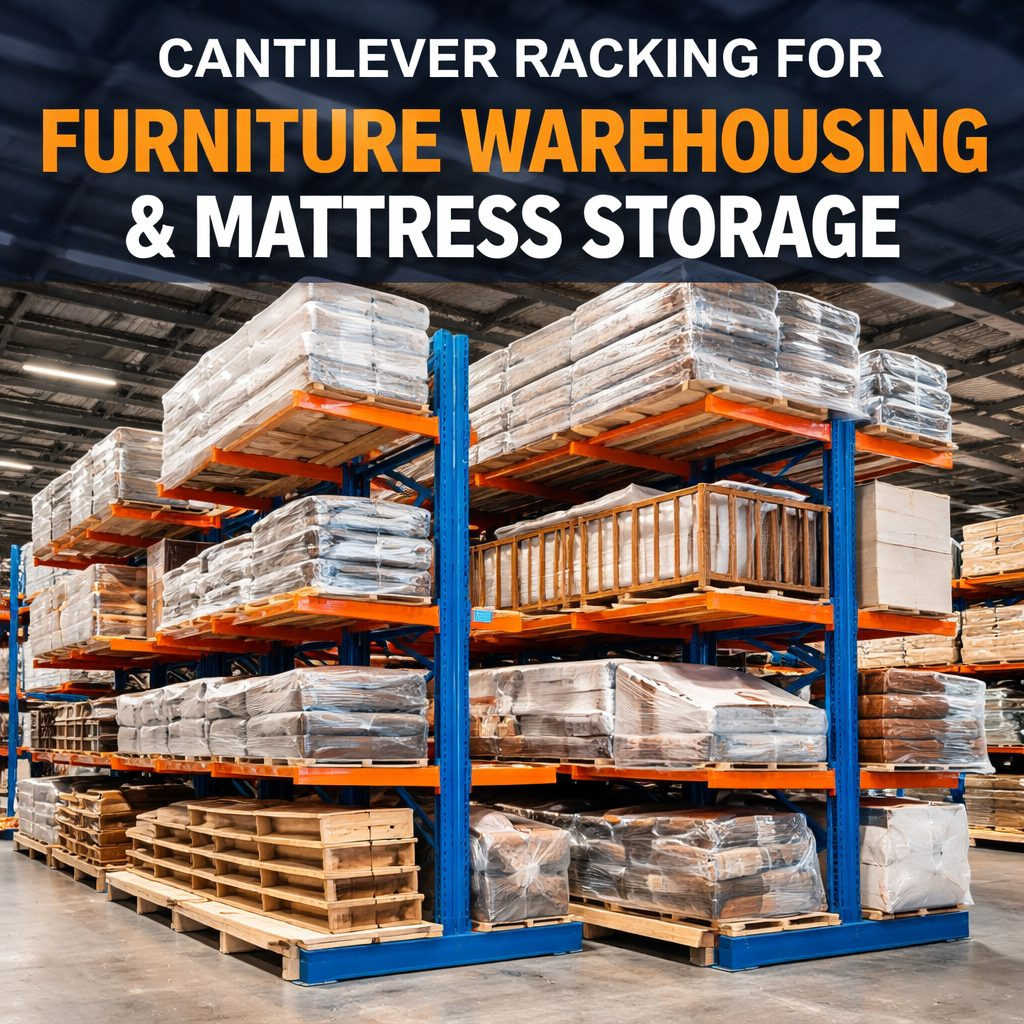
In modern warehousing, furniture and mattress storage present unique challenges. Unlike palletized goods, these products are often long, bulky, lightweight, and irregularly shaped, making them difficult to store using traditional pallet racking. That’s where cantilever racking becomes a highly efficient and scalable storage solution.
Whether you operate a furniture warehouse, mattress distribution center, or retail fulfillment hub, understanding how cantilever racking works—and how to optimize it—can significantly improve storage capacity, safety, and picking efficiency.
What Is Cantilever Racking?
Cantilever racking is a storage system designed for long and oversized items that cannot be stored on standard pallet racks. It consists of vertical columns and horizontal arms that extend outward to support loads without front columns, making it ideal for long-span materials and bulky goods.
Unlike selective pallet racking, cantilever racks offer open-front access, allowing forklifts and manual handlers to load and unload products with ease.
Why Cantilever Racking Is Ideal for Furniture and Mattress Warehouses
Furniture and mattresses are typically large, awkward, and lightweight. Traditional pallet racking often wastes vertical and horizontal space when storing these products.
Cantilever racking for furniture warehousing solves these problems by:
- Providing unobstructed access for long or bulky products
- Maximizing vertical storage space
- Reducing floor clutter and handling damage
- Improving order picking speed and organization
Common Products Stored on Cantilever Racks
- Mattresses and box springs
- Sofas, couches, and sectionals
- Bed frames and headboards
- Dining tables and chairs
- Wardrobes and cabinets
- Long furniture components and panels
Key Benefits of Cantilever Racking for Mattress Storage
1. Maximizes Warehouse Space Utilization
Cantilever systems can be configured vertically to use ceiling height efficiently. This is especially valuable for mattress warehouses where products are bulky but lightweight.
Using vertical cantilever racks for mattresses can increase storage capacity by 30–60% compared to floor stacking.
2. Reduces Product Damage
Mattresses and furniture are prone to bending, tearing, or deformation when stacked improperly. Cantilever arms provide even load distribution, reducing pressure points and preventing sagging.
3. Faster Picking and Loading
With open-front access, forklifts and pickers can easily reach products without moving other inventory. This reduces picking time and improves warehouse throughput.
4. Highly Customizable Design
Cantilever racking systems can be configured with:
- Single-sided or double-sided arms
- Adjustable arm spacing
- Heavy-duty or light-duty load capacities
- Outdoor galvanized finishes
This flexibility makes them suitable for both bulk furniture storage and high-density mattress distribution centers.
Types of Cantilever Racking for Furniture Warehousing
1. Light-Duty Cantilever Racking
Best for:
- Foam mattresses
- Lightweight furniture components
- Retail backroom storage
Light-duty systems typically support 100–1,000 lbs per arm.
2. Medium-Duty Cantilever Racking
Ideal for:
- Box springs
- Wooden furniture panels
- Headboards and frames
Medium-duty systems support 1,000–4,000 lbs per arm.
3. Heavy-Duty Cantilever Racking
Used for:
- Solid wood furniture
- Large sectional sofas
- Bulk commercial furniture storage
Heavy-duty cantilever racks can handle over 10,000 lbs per arm, making them suitable for industrial warehouses.
Design Considerations for Mattress and Furniture Storage
Arm Length and Spacing
Arm length determines how deep the rack can hold products. For mattresses, 48–72 inch arms are common. For sofas and furniture panels, longer arms may be required.
Spacing between arms should match product height to avoid wasted vertical space.
Column Height
Higher columns allow vertical expansion. Many US warehouses use 20–30 ft cantilever racks to maximize cubic storage space.
Load Capacity and Structural Engineering
Always calculate:
- Weight per arm
- Weight per column
- Total system load
Overloading cantilever racks can lead to structural failure and safety hazards.
Aisle Width and Material Handling Equipment
Forklift type affects cantilever layout:
- Narrow aisle forklifts require tighter rack spacing
- Reach trucks allow high vertical storage
- Manual handling requires ergonomic access heights
Cantilever Racking vs Pallet Racking for Furniture Storage
| Feature | Cantilever Racking | Pallet Racking |
|---|---|---|
| Best for long items | ✅ Yes | ❌ Limited |
| Open front access | ✅ Yes | ❌ No |
| Space efficiency for bulky goods | ✅ High | ❌ Low |
| Cost per bay | Moderate | Lower |
| Customization | High | Moderate |
For mattresses and furniture, cantilever racking is often the most efficient storage solution.
Cost Factors for Cantilever Racking Systems
The cost of cantilever racking varies depending on:
- Rack height and arm length
- Load capacity requirements
- Steel grade and finish
- Single-sided vs double-sided configuration
- Installation and anchoring costs
- Seismic and building code compliance
Typical Price Range (USA)
- Light-duty cantilever racks: $100–$300 per arm
- Medium-duty systems: $300–$800 per arm
- Heavy-duty industrial systems: $1,000+ per arm
Installation costs can add 20–40% to total project cost.
Safety and Compliance in the US Market
Cantilever racking systems must comply with:
- RMI (Rack Manufacturers Institute) standards
- OSHA warehouse safety regulations
- Local building and seismic codes (especially in California)
Key Safety Practices
- Anchor columns to concrete floors
- Use load rating signage
- Install safety stops or lips on arms
- Train forklift operators
- Conduct regular rack inspections
Advanced Tips for Furniture and Mattress Warehousing
Use Vertical Slotting for Fast-Moving SKUs
Place high-demand mattress sizes (Queen and King) at ergonomic heights for faster picking.
Add Decking or Shelving for Accessories
Cantilever racks can be fitted with decking to store pillows, frames, and accessories, creating a hybrid storage system.
Implement WMS Slotting Optimization
Warehouse Management Systems can optimize product placement on cantilever racks based on sales velocity and picking patterns.
Consider Mobile Cantilever Racking
Mobile systems mounted on rails can increase storage density by up to 80%, ideal for high-value furniture inventory.
Outdoor Cantilever Storage for Furniture Manufacturers
Galvanized cantilever racks are widely used outdoors to store raw materials like wood panels and furniture components.
Environmental and Sustainability Considerations
Cantilever racks are often made from recyclable steel and can be reconfigured instead of replaced, reducing warehouse carbon footprint.
Using high-density vertical storage also reduces warehouse expansion needs, lowering energy and construction costs.
Who Should Use Cantilever Racking?
Cantilever racking is ideal for:
- Furniture manufacturers
- Mattress distributors
- E-commerce fulfillment centers
- Retail furniture warehouses
- 3PL logistics providers
- Building material and panel storage facilities
If your warehouse handles long, bulky, or oversized products, cantilever racking is often the most efficient storage solution available.
Frequently Asked Questions (FAQ)
1. What is the best racking system for mattress storage?
Cantilever racking for mattress storage is one of the best solutions because it allows open-front access, vertical stacking, and minimal product damage compared to pallet racking or floor stacking.
2. How much weight can cantilever racking hold?
Cantilever racks can hold anywhere from 100 lbs to over 10,000 lbs per arm, depending on whether they are light-duty, medium-duty, or heavy-duty systems. Always verify load ratings with the manufacturer.
3. Is cantilever racking expensive compared to pallet racking?
Cantilever racking generally costs more per bay than standard pallet racking, but it saves space and reduces product damage, often resulting in lower total operational costs over time.
4. Can cantilever racks be used for furniture warehouses?
Yes. Cantilever racking for furniture warehousing is widely used to store sofas, tables, cabinets, and long furniture components due to its flexibility and open design.
5. Are cantilever racks safe for warehouse use?
Yes, when installed correctly and maintained according to RMI and OSHA standards. Proper anchoring, load signage, and regular inspections are essential for safety.
6. Can cantilever racks be installed outdoors?
Yes. Galvanized cantilever racks are commonly used outdoors for storing furniture components, lumber, and panels, especially in manufacturing environments.
7. How tall can cantilever racking systems be?
Cantilever racks can reach 30 feet or more, depending on building height and engineering requirements. Taller systems require professional design and seismic compliance.
8. Do I need professional installation for cantilever racking?
Professional installation is strongly recommended to ensure structural integrity, load compliance, and safety standards. Improper installation can lead to rack failure and safety hazards.
9. What forklift is best for cantilever racking?
Reach trucks and narrow aisle forklifts work best for high vertical cantilever systems, while standard counterbalance forklifts are suitable for ground-level storage.
10. How long does cantilever racking last?
With proper maintenance, cantilever racks can last 20–30 years or more, making them a long-term investment for warehouses.
Final Thoughts
Cantilever racking for furniture warehousing and mattress storage offers unmatched flexibility, safety, and space efficiency for bulky and oversized products. While the initial investment may be higher than traditional pallet racking, the long-term benefits—including reduced damage, faster picking, and higher storage density—make it a smart choice for modern warehouses.
By choosing the right cantilever configuration, following safety standards, and optimizing warehouse layout, businesses can significantly improve operational efficiency and scalability.
If your warehouse handles furniture or mattresses, cantilever racking is not just an option—it’s a strategic advantage.